A test drive is your best chance to catch what a vehicle history report might miss. Sellers can polish a car’s appearance and paperwork, but they can’t always hide the physical evidence of a past collision once you’re behind the wheel and paying close attention. Knowing exactly what to look, listen, and feel for turns a routine test drive into a genuine inspection. This guide walks you through the specific clues that reveal whether a car has been in an accident before you sign anything.
Inspect Panel Gaps and Paint Consistency Before You Drive

Before you even start the engine, walk around the car slowly and look at how the body panels line up. Uneven gaps between doors, hoods, and fenders often indicate a panel was removed and reinstalled after damage. Compare the color and texture of the paint under different lighting angles, since a mismatched panel from a rushed auto body repair job will often look slightly off in direct sunlight.
Overspray is another giveaway that’s easy to miss if you’re not looking closely. Check inside the door jambs, around rubber seals, and along the undercarriage edges for paint that doesn’t belong there. A professional collision repair job should leave no trace of overspray, so its presence usually means corners were cut somewhere in the process.
- Run your hand along panel seams to feel for uneven ridges
- Look for slightly different shades of the same color under sunlight versus shade
- Check door jambs and trunk edges for overspray or masking tape residue
- Compare panel gaps side to side for symmetry
Listen for Unusual Sounds Over Bumps and Potholes
Once you’re moving, pay attention to any creaks, clunks, or rattles when you drive over uneven pavement. A structurally sound car should absorb bumps with a controlled, quiet motion. Persistent noises can point to prior frame damage or suspension components that were replaced with aftermarket parts that don’t quite fit as designed.
Pay special attention to noises coming from one side of the car versus the other. Asymmetrical sounds often suggest that only one corner of the vehicle was repaired after an impact, leaving the untouched side to age and sound different. If you hear anything suspicious, make a mental note of exactly when it happens so you can describe it accurately later.
- Drive over speed bumps at low speed and listen for metallic clunks
- Note if noises happen only on turns, only on bumps, or constantly
- Pay attention to squeaks that might indicate loose trim from a prior repair
- Ask a passenger to listen from the back seat for a second opinion
Test How the Car Tracks in a Straight Line

Find a straight, empty stretch of road and take your hands slightly off the wheel to see if the car pulls to one side. A vehicle that drifts consistently in one direction may have frame or alignment issues stemming from a past collision. This is one of the most reliable test drive clues because it’s difficult for a seller to disguise or fix cheaply.
Steering wheel position matters too. If the wheel isn’t centered when the car is driving straight, that’s a red flag worth investigating further. Minor alignment problems are normal wear and tear, but a car that consistently pulls hard to one side likely needs more than routine adjustment.
- Test on a flat, straight road with no crown or slope
- Watch whether the steering wheel logo sits level when driving straight
- Note any vibration through the wheel at highway speed
- Try the same test at both low and high speeds
Evaluate Braking Performance at Different Speeds
Braking behavior can reveal a lot about a car’s mechanical history. Press firmly on the brakes at moderate speed in a safe, empty area and feel for pulsation, grinding, or the car pulling to one side. These symptoms can point to warped rotors or uneven wear that sometimes results from a rushed repair following an accident.
It’s also worth considering the cost of ignoring these signs. Brake repair isn’t cheap, and if a car needs immediate brake services after purchase, that expense should factor into your negotiation. A seller who recently invested in quality brake work will usually be happy to show receipts, while one who avoids the topic may be hiding something.
- Brake hard from 30 mph in a safe, empty lot to check for pulling
- Listen for grinding or squealing that suggests worn components
- Feel for pulsation in the pedal, which can indicate warped rotors
- Ask for maintenance records specifically related to brake work
Check the Alignment of Doors, Trunk, and Hood
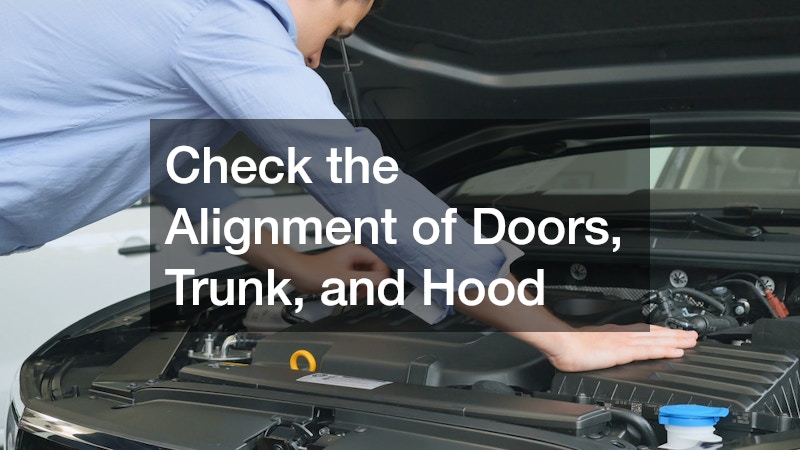
Open and close every door, the trunk, and the hood slowly, paying close attention to how each one latches and settles into place. Doors that require extra force to close, or that don’t sit flush when shut, often indicate the frame has shifted slightly from a prior impact. This kind of subtle misalignment is a classic sign of past structural work.
Run your finger along the gaps where the doors meet the fenders and rear quarter panels. These gaps should be even on both sides of the car, typically within a few millimeters of each other; if one side shows a noticeably wider or narrower gap than the other, that’s a red flag. Also, check whether the trunk lid or hood sits slightly higher or lower than the surrounding body panels, since even a small height difference can point to replaced or realigned parts.
Pay attention to how much resistance you feel when closing each panel. A door or hood that slams shut easily on one side but needs a firm push on the other suggests the hinges or frame have been bent and re-welded. Similarly, listen for unusual sounds like grinding, popping, or metal-on-metal contact, which can mean the panel is rubbing against a misaligned frame rail.
Finally, check the rubber weather seals around the doors and trunk. Seals that look stretched, torn, or unevenly compressed on one side often mean a panel was replaced or the body was pulled back into shape after a collision, rather than the vehicle having its original factory-fitted parts.
Before you even sit inside, walk around the car and look at the gaps between each door, the fenders, the hood, and the trunk lid. These gaps should be even on both sides and consistent from top to bottom, usually somewhere between 4mm and 6m,m depending on the make and model. A gap that’s noticeably wider on one side, or one that narrows as it goes down, often points to a panel that was replaced or a frame that was bent and pulled back into shape.
Take your time here, since rushing through this check is how buyers miss the clearest evidence available. A five-minute walk-around comparing panel gaps and seals can reveal more about a car’s history than the seller’s word ever will.
- Close each door with light-to-moderate pressure and watch whether the gap along the edges stays even from top to bottom
- Stand a few feet back and eyeball the trunk and hood lines against the fenders—panels that sit higher, lower, or crooked suggest bodywork or replacement
- Check for uneven panel gaps wider than a pencil width (roughly 4-5mm), which can signal misaligned parts after a collision repair
- Look for fresh rubber seals or weatherstripping that look newer than the rest of the car’s interior and trim
- Inspect paint and texture around door edges, hood seams, and trunk lips for slight color mismatches or overspray
- Listen for a solid thunk versus a hollow, rattly, or loose sound when closing doors, which can indicate reinforcement damage or poor-quality repair work
- Test the hood and trunk latches to confirm they close firmly on the first try without needing extra slams or adjustments
Examine Glass, Tint, and Trim for Replacement Signs
Windows and glass trim can quietly reveal a lot about a car’s past. Look closely at the edges of the windshield and side windows for uneven adhesive lines or slightly different tint shades, which can suggest a replacement after a collision. If the car has window tinting, check whether it’s consistent across all windows, since mismatched tint often means one piece of glass was swapped separately from the rest. It’s also worth asking whether the vehicle has ever had a PPF film service applied, since paint protection film installed after bodywork can leave subtle edge lines or bubbling near trim that hint at prior repairs.
Manufacturer codes etched into the corner of each window should generally match in date and supplier. If one window has a noticeably different code or font, it likely wasn’t part of the original build. This detail is easy to overlook, but can be one of the most concrete pieces of evidence you’ll find.
- Compare tint shade and film quality across all windows
- Check for manufacturer date codes etched in glass corners
- Look for uneven or excess sealant around window edges
- Inspect trim pieces near mirrors and pillars for color mismatches
Look Underneath for Frame and Undercarriage Repairs
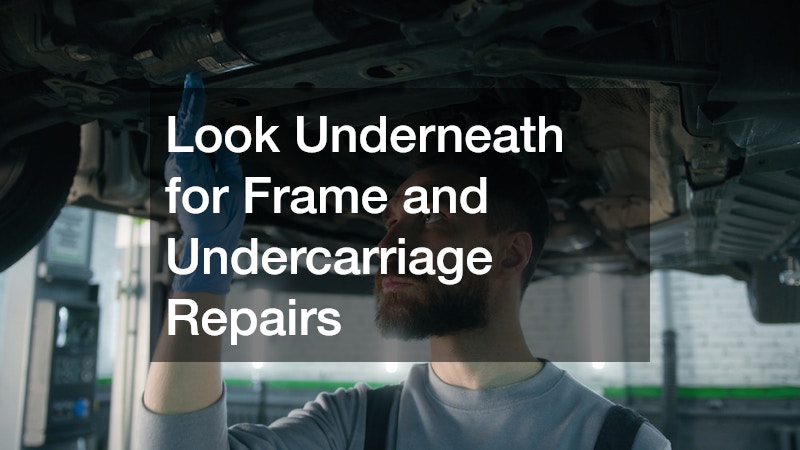
If possible, ask to see the car on a lift or use a flashlight to check underneath before your drive. Fresh undercoating in patches, new bolts among older rusted ones, or bent frame rails are strong signs of prior structural repair. This area is one that sellers rarely think to clean up, making it a valuable place to look for honest evidence.
Pay attention to any welding marks or unusual bracing that looks newer than the rest of the vehicle. A reputable auto repair shop performing structural work should leave clean, professional welds, but a lower-quality repair may show sloppy seams or mismatched metal thickness. If anything looks questionable, it’s worth having a specialist inspect it before you commit to buying.
- Look for fresh undercoating that doesn’t match surrounding rust patterns
- Check for new bolts or fasteners among older, weathered ones
- Search for bent, kinked, or repainted frame rails
- Note any welding seams that look inconsistent with factory work
Investigate Add-Ons That May Mask Prior Damage
Sometimes, accident history gets disguised behind upgrades that make a car look newer or more customized than it actually is. Fresh ceramic coating can hide minor paint imperfections and swirl marks that would otherwise catch your eye during a close inspection. A shiny, uniform finish is appealing, but it shouldn’t stop you from checking panel gaps and seams underneath.
Likewise, be cautious with vehicles that have undergone automotive upfitting, such as added trim, brackets, or towing equipment, since these modifications can sometimes cover bodywork that was done imperfectly. Aftermarket bumper covers or fender flares deserve the same scrutiny, as they can be bolted over cracked mounts or misaligned frames without much effort. These additions aren’t automatically red flags, but they do mean you should look more carefully rather than less.
- Ask when any coating was applied and by whom
- Check if upgrades were installed before or after a reported repair
- Look underneath the added equipment for hidden dents or filler
- Request documentation for any upfitting work performed
Confirm Keys, Locks, and Electronics Work as Expected
Accident history isn’t only about the body and frame; it can also show up in a car’s electronics and security systems. Test every key fob, lock, and window switch to make sure they respond consistently. If a vehicle needed a replacement key or ignition system after being recovered from theft or an accident, you may notice slight inconsistencies in how the locks operate.
If a car has clearly had locksmith work done, it’s not necessarily a bad sign, but it’s worth asking why. Reputable auto locksmiths keep records of the work performed, and a seller should be able to explain the reason behind any replacement. Unexplained lock or key replacements paired with other red flags are worth taking seriously.
- Test all doors, trunk, and fuel cap locks individually
- Check that key fobs sync properly and respond at a normal distance
- Ask if any locks or ignition components were ever replaced
- Look for scratches around the ignition or door locks, suggesting forced entry
A thorough test drive is one of the most powerful tools you have for uncovering a car’s real history before you commit to buying it. By paying attention to sound, feel, alignment, and small physical details, you put yourself in a much stronger position to negotiate or walk away. If anything you find raises concern, don’t hesitate to have a trusted mechanic take a closer look before finalizing the deal. Taking these extra steps now can save you from costly surprises down the road.