Surviving a collision caused by an impaired driver is an extraordinarily jarring experience. In a single instant, your health, routine, and financial stability are thrown into complete disarray. As you process the physical shock and emotional trauma of the event, you are forced to navigate an overwhelming avalanche of medical visits, vehicle repairs, and administrative tasks. Amid this chaotic environment, the drunk driver’s insurance company will reach out to you almost immediately.
While insurance adjusters may sound courteous, concerned, and eager to help, it is vital to understand that their primary objective is to minimize the financial liability of their company. Insurance carriers are profit-driven entities, and their claims representatives are trained to reduce payouts through rapid settlements, strategic questioning, and technical policy exclusions. When dealing with the aftermath of a drunk driving crash, making missteps during conversations with insurance adjusters can severely compromise your ability to recover full compensation for your injuries and property damage. Protecting your financial future and personal well-being requires a clear understanding of the common traps insurance companies set—and how to avoid them completely.
Immediate Post-Accident Communication Errors

The hours and days directly following a crash are the most critical for your claim. Insurance adjusters know that victims are often in pain, confused, and worried about mounting bills, making them particularly vulnerable to subtle investigative tactics.
Limit Early Statements and Avoid Admitting Fault
One of the first requests an insurance adjuster will make is for a recorded statement regarding how the accident occurred. They may frame this as a routine, mandatory step required to “get your claim started” or “process your rental vehicle.” Giving a recorded statement early on is one of the most dangerous mistakes you can make.
- Refuse Recorded Statements: You are generally under no legal obligation to provide a recorded statement to the at-fault driver’s insurance company. Politely decline their request until you have evaluated your legal options.
- Avoid Casual Comment: Never use conversational phrases like “I’m doing fine,” “I didn’t see them coming,” or “I’m sorry.” Adjusters routinely use these phrases to claim you were not truly injured or that you contributed to the cause of the crash.
Secure Official Documentation to Establish Driver Liability
Even when an impaired driver was arrested at the scene, insurance companies will rarely admit full liability without official verification. They may argue that road conditions, mechanical failures, or your own driving contributed to the impact.
Gathering authoritative documentation prevents the insurer from shifting blame. Ensure you obtain the complete police collision report, including officer notes, witness statements, and preliminary field sobriety test results. The presence of emergency responders and official law enforcement visual logs—such as recorded footage capturing a police car light flashing at the scene—provides indisputable proof of the emergency response and driver impairment. Securing these official records early stops the adjuster from disputing how the collision occurred or questioning the severity of the incident.
Premature Settlement Traps and Medical Evaluation Flaws
Insurance companies frequently utilize “fast-cash” settlement strategies following crashes involving obvious policyholder fault. By offering a quick check upfront, they hope to close the claim before the full extent of your injuries becomes clear.
Delay Settlement Offers Until the Full Scope of Injuries Is Known
Accepting an early settlement offer is a catastrophic mistake. When you accept a payout, the insurance company will require you to sign a liability release form. This document permanently waives your right to seek any additional money from the driver or their insurance carrier, even if you require surgeries, extensive physical therapy, or miss months of work down the road.
Accepting quick cash sacrifices full long-term recovery and often leaves you personally responsible for hidden medical bills, ongoing therapy, and uncompensated lost wages. To ensure you receive fair compensation, you must wait until you reach Maximum Medical Improvement (MMI). MMI is the point at which a doctor determines your health has stabilized and further medical treatment will not significantly alter your condition. Only at MMI can your total current and future medical expenses be accurately calculated.
Document Every Physical and Psychological Impact Thoroughly
A major pitfall in personal injury claims is failing to document every aspect of your physical and emotional recovery. Insurance adjusters rely on medical records to evaluate claims; if an injury is not explicitly documented by a medical professional, the insurance company will act as though it does not exist.
Adhering to a strict medical routine provides clear evidence of your losses:
- Seek Immediate Medical Evaluation: Adrenaline masks severe pain. Visit an emergency room or urgent care center immediately following the crash, even if you feel you only sustained minor bumps.
- Follow All Treatment Plans: Attend every physical therapy session, take prescribed medications, and follow up with specialists as recommended. Gaps in medical treatment allow adjusters to argue that your pain was not severe or was caused by an unrelated event.
Establishing a direct link between the crash and your physical personal injury ensures that the insurance carrier cannot dismiss your pain or downplay the financial value of your claim.
Vehicle Damage Assessment and Repair Pitfalls
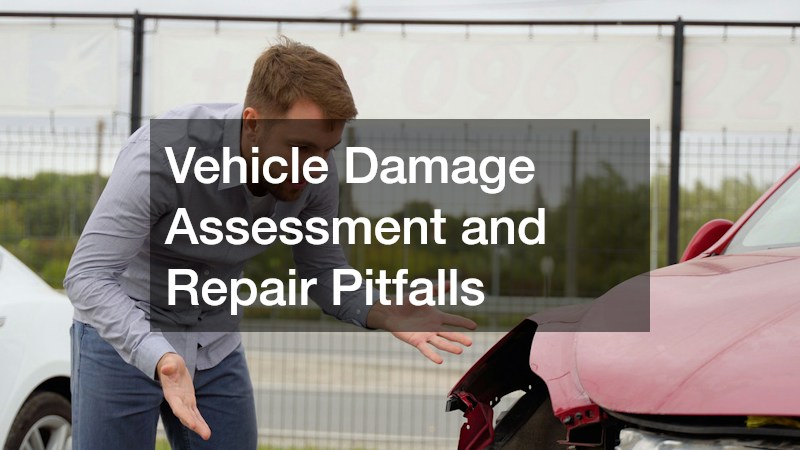
Property damage claims might seem straightforward compared to bodily injury claims, but they are filled with financial traps designed to reduce the insurer’s payout on your damaged vehicle.
Avoid Inadequate Vehicle Damage Appraisals and Quick Inspections
Insurance adjusters often perform quick, visual inspections or ask you to upload photos via a mobile app to generate a rapid repair estimate. These superficial appraisals almost always miss deep structural, frame, alignment, and mechanical damage caused by violent, high-impact collisions. Preferred body shops associated with insurers frequently focus on speed and low cost, whereas independent technicians conduct complete teardowns to check frame rails, suspension systems, and secondary components.
To avoid paying out of pocket for unaddressed mechanical issues later, do not rely solely on the adjuster’s estimate. Take your vehicle to an independent, certified technician who will perform a complete teardown and inspection. Choosing a trusted, fully equipped auto repair service ensures that hidden suspension problems, engine alignment issues, and compromised safety features are completely documented and submitted to the insurance company for full coverage.
Ensure Proper Transport and Secure Storage of Damaged Vehicles
Directly after a major crash, your vehicle will likely be non-drivable and must be moved from the roadway immediately to prevent secondary accidents and clear traffic.
Failing to manage where your vehicle is taken can lead to massive storage fee charges. Impound yards and unvetted storage facilities charge high daily fees. If the insurance company delays its investigation, these storage charges can quickly stack up into thousands of dollars. Insurers will often attempt to shift these storage costs onto you, claiming you failed to mitigate damages. Coordinating direct, documented car towing from the accident scene straight to a certified repair facility or approved storage lot prevents surprise fees and keeps your property damage claim moving forward smoothly.
Glass, Aftermarket, and Auxiliary Damage Oversight
During severe impacts, secondary vehicle components—such as safety glass, sensor arrays, specialized window films, and interior electronics—suffer extensive damage that adjusters frequently leave off initial repair estimates.
Demand OEM Quality for Structural Glass and Window Restorations
In modern vehicles, windshields and window glass are integral to the structural integrity of the cabin, supporting the roof during rollover events and housing Advanced Driver Assistance System (ADAS) sensors, cameras, and lane-departure hardware.
Insurers frequently push for cheap, aftermarket glass or cut-rate installation to cut costs. Low-quality glass can distort vision, fail to seal properly against water leaks, and render your vehicle’s safety features inoperable because the cameras cannot calibrate correctly through the glass. When arranging repairs, insist on original equipment manufacturer (OEM) glass installation. Utilizing specialized car glass replacements ensures that the structural frame of your vehicle remains completely safe and all electronic safety sensors are recalibrated to factory specifications.
Document and Claim Custom Vehicle Modifications and Protective Upgrades
If your vehicle featured aftermarket enhancements, custom interior trim, or high-performance protective films before the crash, insurance adjusters will default to calculating repair costs based on standard factory stock parts.
- Itemized Receipts: Provide clear proof of the original purchase price and professional fitment costs.
- Before and After Photos: Present clear visual evidence illustrating the exact condition of custom components prior to the impact.
To recover the true value of your vehicle’s custom features, you must present itemized receipts, installation records, and clear photographs taken prior to the accident. If you previously invested in a professional car window tinting service to apply ceramic heat-rejection film, high-grade privacy tint, or solar protective coatings, include these items in your property damage demand. Presenting proof of installation forces the insurer to pay for the professional re-application of these specialized custom upgrades.
Temporary Transportation and Daily Living Disruption Traps
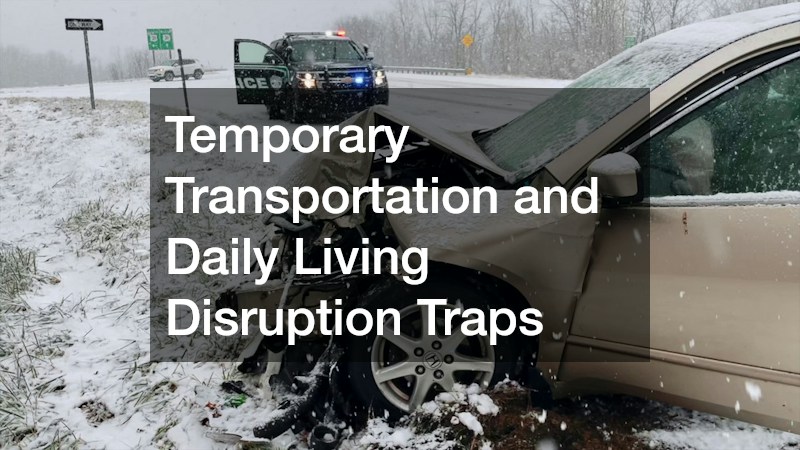
While your vehicle is sitting in a repair shop or undergoing a total loss evaluation, your daily life continues. Navigating alternate transportation without falling into financial traps requires careful management of your insurance coverage rights.
Secure Adequate Alternate Transportation Options Without Out-of-Pocket Drain
When your primary vehicle is out of commission, you are entitled to loss-of-use compensation. However, insurance companies often try to minimize this cost by providing undersized compact loaners or capping rental coverage periods before your vehicle repairs are actually finished.
- Demand Equivalent Transportation: You are entitled to a rental vehicle that reasonably matches the size and functionality of your damaged vehicle, especially if you require an SUV or truck for work or family transport.
- Monitor Repair Timelines: Keep in constant communication with the repair facility. If parts are delayed, inform the insurance adjuster immediately so they extend your rental coverage window.
Securing a seamless car rental arrangement ensures you can commute to work, attend medical appointments, and transport your family without draining your personal bank account during a lengthy claim process.
Account for Collateral Property Damage at Secure Sites
Drunk driving crashes do not always occur on open highways; impaired drivers frequently drift off roads, smashing through roadside infrastructure, private residential entryways, or commercial barriers.
When a collision destroys specialized perimeter security systems, resolving the claim becomes highly complex, involving multiple property owners, HOA boards, and commercial management companies. If an impaired driver crashes through private community gates or commercial entry points, property managers must immediately account for ruined hardware and digital components. Modern entrances rely on specialized gated community access control software to manage resident entry, track security logs, and operate automated barrier arms. Incorporating damage to digital control systems, optical sensors, and mechanical gate arms into the overall liability claim ensures that private property owners do not carry the financial burden of a drunk driver’s destruction.
Legal Representation and Maximizing Settlement Value
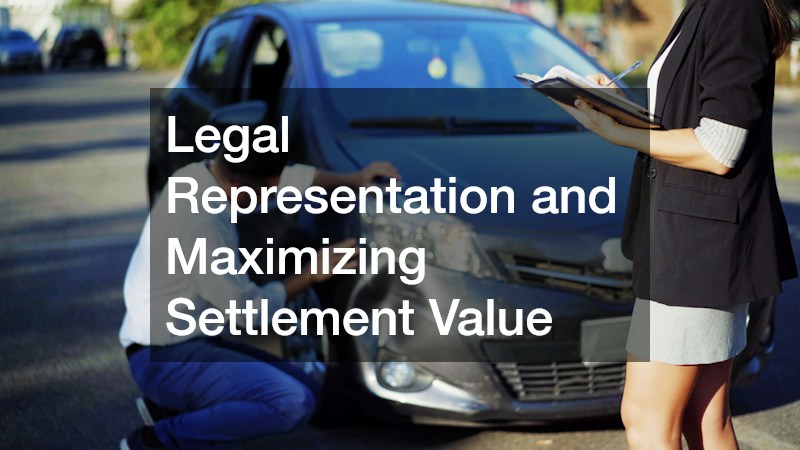
Navigating a personal injury and property damage claim alone puts you at a significant disadvantage against multi-billion-dollar insurance corporations. Engaging experienced legal representation is the single most effective way to protect your rights and maximize your recovery.
Recognize When Insurance Companies Are Acting in Bad Faith
Insurance carriers are legally bound by a duty of good faith and fair dealing. However, when handling high-exposure claims like DUI accidents, adjusters sometimes cross the line into deceptive, bad-faith tactics.
- Unreasonable Delays: Unreasonably stalling investigations, refusing to answer phone calls, or repeatedly transferring your file to new adjusters to wear you down.
- Lowball Settlement Offers: Offering an insultingly low settlement amount that covers only a fraction of your clear, documented medical expenses.
Recognizing these red flags is crucial. When an insurer engages in bad faith practices, bringing in a seasoned personal injury attorney immediately shifts the power dynamic, forcing the insurance company to take your claim seriously or face bad-faith litigation.
Engage Specialized Counsel to Level the Playing Field
Drunk driving cases differ significantly from ordinary traffic accident claims. Because the at-fault party committed a criminal act, the legal strategy behind your civil claim must account for police reports, breathalyzer/blood test results, criminal court proceedings, and potential punitive damages.
An experienced legal team serves as an indispensable shield against aggressive adjusters, preventing them from contacting you directly or misinterpreting your statements. Specialized attorneys know how to accurately calculate long-term medical costs, leverage evidence from criminal DUI proceedings, and pursue punitive damages to hold reckless drivers fully accountable. Operating on a contingency fee model ensures that victims gain top-tier representation without paying out-of-pocket legal expenses unless a favorable settlement or verdict is secured.
Partnering with dedicated drunk driving accident attorneys ensures that every avenue of financial recovery is explored. Specialized attorneys know how to obtain criminal court records, subpoena bar tabs or toxicology reports, and build an unassailable case that holds both the driver and their insurance company fully accountable.
Recovering from a drunk driving crash requires patience, meticulous organization, and firm boundaries when dealing with insurance companies. By refusing early settlement traps, seeking immediate medical attention, insisting on proper repairs, and securing skilled legal representation, you effectively shield yourself from predatory insurance tactics and secure the full, fair compensation you deserve.